Valorant Champions Shanghai: what Group Stage Day 2 revealed about the 2026 title race
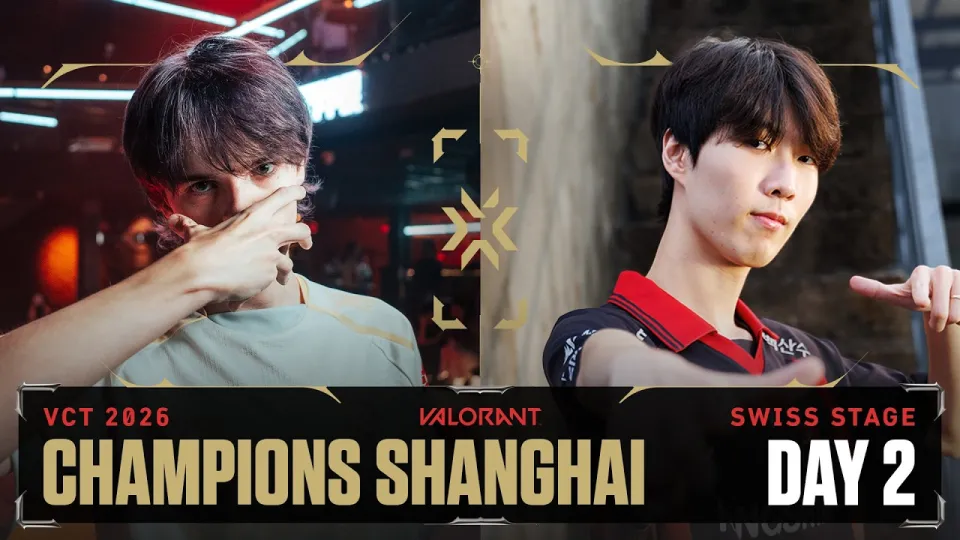
Video: VALORANT Champions Shanghai — Group Stage — Day 2
Need articles like this for your video? They help promote it on YouTube and Google — order them in the Telegram bot @sat_sit_bot. It writes articles around your video, embeds the video and publishes them on popular niche websites (no ads). Free trial — 50 articles.
· based on the channel VALORANT Champions Tour
Valorant Champions Shanghai is the final international event of the 2026 VCT season, where 16 teams from Americas, CN, EMEA and Pacific fight for the title of 2026 VALORANT World Champion between September 24 and October 18. Group Stage Day 2, published by the VALORANT Champions Tour channel on September 25, 2026, is the clearest look yet at how the new generation of contenders stacks up against the established names. For schedules, brackets and official announcements, the fastest source is the VALORANT Esports account on X.
What the Valorant Champions Shanghai format actually asks of teams
The tournament gathers 16 teams across four regions, and the group stage is designed to punish slow starters rather than reward them. Every map in the opening days carries seeding weight, so a single dropped series can push a team into a harder side of the bracket later. That structure explains why Day 2 produced so many short, one-sided maps: teams that had already lost once were playing with their tournament life effectively on the line, while teams sitting at 1-0 could afford to experiment with agent compositions. The event description frames the whole thing as a season where "new contenders have emerged, expectations have been broken, and twice at Masters, a new champion has risen" — which is a polite way of saying that no roster in Shanghai is safe on reputation alone.
Why Day 2 felt like a speedrun
The most repeated reaction to the broadcast was that the day moved unusually fast, with maps closing before viewers had settled in. A few practical reasons explain that pattern:
- Group stage matches use a shorter path to victory than a full playoff series, so a 2-0 result can be over in well under two hours of airtime.
- Teams on the back foot tend to force early rounds, which either snowballs into a blowout or collapses entirely.
- Broadcast pacing compresses breaks between maps, so the total runtime of a day looks shorter than the number of matches suggests.
That is also why the top comment under the video is a spoiler-blocking timestamp post rather than a highlight request: with results arriving this quickly, the VOD is the only safe way to watch without learning the scores first.
Seeding, upsets and the Pick'em problem
Pick'em brackets are where the community's assumptions become visible, and Day 2 exposed how thin those assumptions are. Several viewers pointed out that picking against the CN representatives looked like the easiest route to points, while others argued the opposite — that writing off an entire region before the bracket resolves is how brackets get ruined. The honest answer sits in the middle: group stage results are a sample of two or three maps, not a verdict on a region. A team can lose a group match on a single pistol round swing and still reach the playoff stage, and a team can win 2-0 while showing a map pool that will not survive a best-of-five. If you are filling out a Pick'em, weight recent international results over regional dominance, and check which maps each team has actually banned in Shanghai rather than which maps they were known for earlier in the season.
The CN slot debate, explained without the noise
Four CN slots at an international event is a recurring argument, and Day 2 gave it fresh fuel because some matches looked lopsided. The structural reason for the allocation is straightforward: VCT grants slots per region based on that region's own competitive circuit, and CN has a full league with its own audience, sponsors and qualifier pathway. Merging CN into Pacific would remove a standalone circuit that produces its own talent pipeline, and it would not automatically raise the level of the bottom seeds — it would just move the same teams into a different bracket. What actually changes international performance is scrim quality, coaching depth and how many officials a region can send to events, all of which take seasons to build. The fair criticism is not that CN has slots; it is that slot allocation should be reviewed against results over a full cycle, not a single group stage day.
Reading the broadcast: interviews, comms and what they tell you
Two production choices dominated the discussion: translated interviews and the occasional cut to in-game voice comms. Translated segments add real time to a broadcast, and viewers who are watching for gameplay find the delay frustrating, but the alternative — skipping player interviews entirely — costs the event the context that makes a new champion's run meaningful. Comms clips are more useful than they look. A team that communicates cleanly under pressure tends to convert advantages; a team that talks over itself in a clutch round usually loses the next two. If you want to learn from the VOD rather than just watch it, pause on the comms segments and compare how the winning side assigns information versus how the losing side does.
What to watch in the next Group Stage days
Three things will decide how the Shanghai group stage shakes out. First, map pool depth: teams that can only win on two maps will be targeted in veto. Second, adaptation speed: the squads that looked dominant on Day 2 will face opponents who have now studied their setups. Third, composure in elimination matches, where the difference between a 2-0 and a 1-2 is usually one retake. Keep an eye on how the 1-0 teams handle their second series — a comfortable win there effectively books a playoff spot and lets a roster hide strategies for the bracket.
Useful links
All official VALORANT Esports channels publish schedules, results, photos and announcements for Shanghai:
- https://x.com/valorantesports
- https://www.facebook.com/ValorantEsports/
- https://www.instagram.com/valorantesports/
- https://www.tiktok.com/@valorantesports
- https://www.twitch.tv/valorant
Final takeaway
Valorant Champions Shanghai Group Stage Day 2 is less a highlight reel and more a stress test: it shows which of the 16 teams can absorb a loss and still play their own game. The tournament runs until October 18, and the 2026 world champion will come from a field where Masters titles no longer guarantee anything. The VOD breakdown comes courtesy of the VALORANT Champions Tour channel, which is carrying the full event broadcast. For brackets, start times and official clips, follow VALORANT Esports on X and check the schedule before the next match day.
Key takeaways
- Valorant Champions Shanghai runs from September 24 to October 18, with 16 teams from Americas, CN, EMEA and Pacific.
- Group Stage Day 2 was broadcast by the VALORANT Champions Tour channel on September 25, 2026.
- The winner of the event becomes the 2026 VALORANT World Champion.
- Four slots belong to the CN region, a format point viewers argue about every international event.
- Official updates, brackets and clips are posted through the VALORANT Esports social accounts.
Questions & answers
How many teams play at Valorant Champions Shanghai and where do they come from?
Sixteen teams qualify from four regions: Americas, CN, EMEA and Pacific. They compete in a group stage before the playoff bracket, and the last team standing becomes the 2026 VALORANT World Champion. The event runs from September 24 to October 18.
Why did the Group Stage Day 2 matches finish so quickly?
Group stage series are shorter than playoff series, and teams that fall behind early often force rounds and lose maps in a snowball. Combined with tight broadcast pacing between maps, a full day of matches can feel like a speedrun even though several series were played.
Is it worth picking against the CN teams in a Pick'em bracket?
It can look like the easy route, but group stage results are a small sample and one pistol round can flip a map. Weight recent international results and each team's actual map bans in Shanghai rather than assuming a region will underperform.
Should CN keep four slots at international Valorant events?
Slot allocation follows each region's own competitive circuit, and CN has a full league with its own qualifier pathway and audience. The more useful debate is whether allocations should be reviewed across a complete season cycle rather than judged on a single group stage day.
Source: VALORANT Champions Shanghai — Group Stage — Day 2 · Markdown version